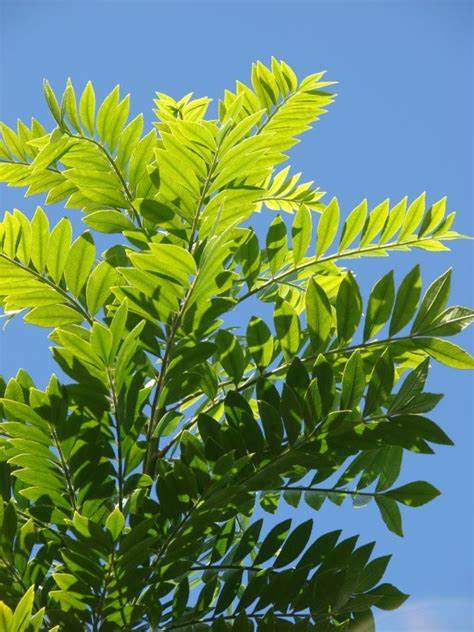
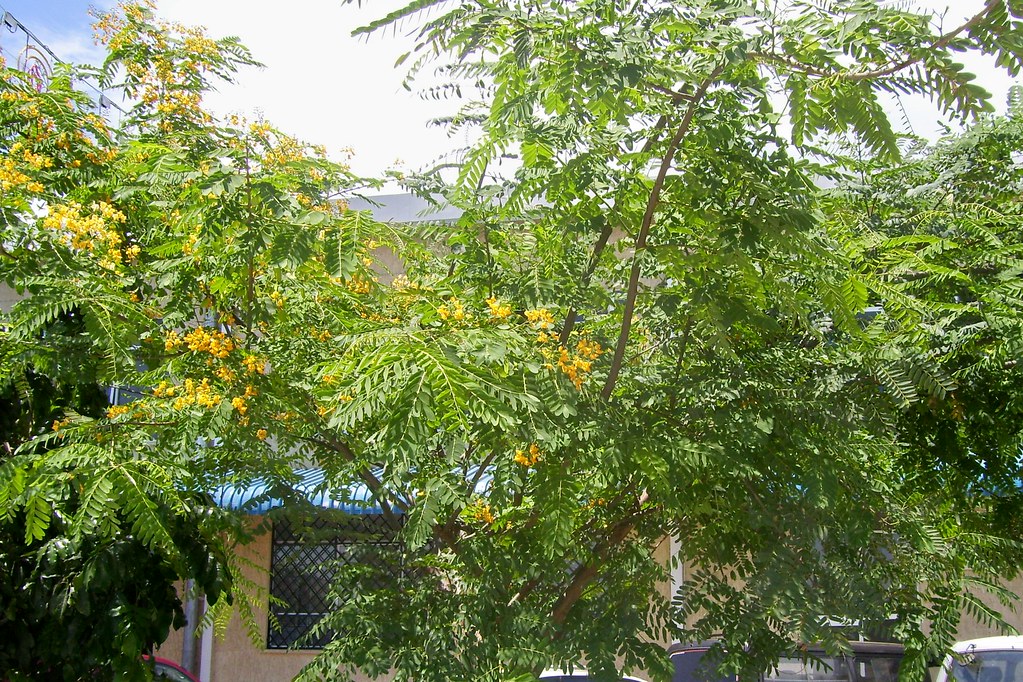
It is a perennial, medium-sized legume tree, it isdeciduous but may be evergreen.
BARK: The bark is grayish-brown to whitish in color.
LEAVES: Its leaves are pinnately compound and opposite in arrangement. Its leaflets are oblong-shaped, opposite in arrangement and pointed at the tip.
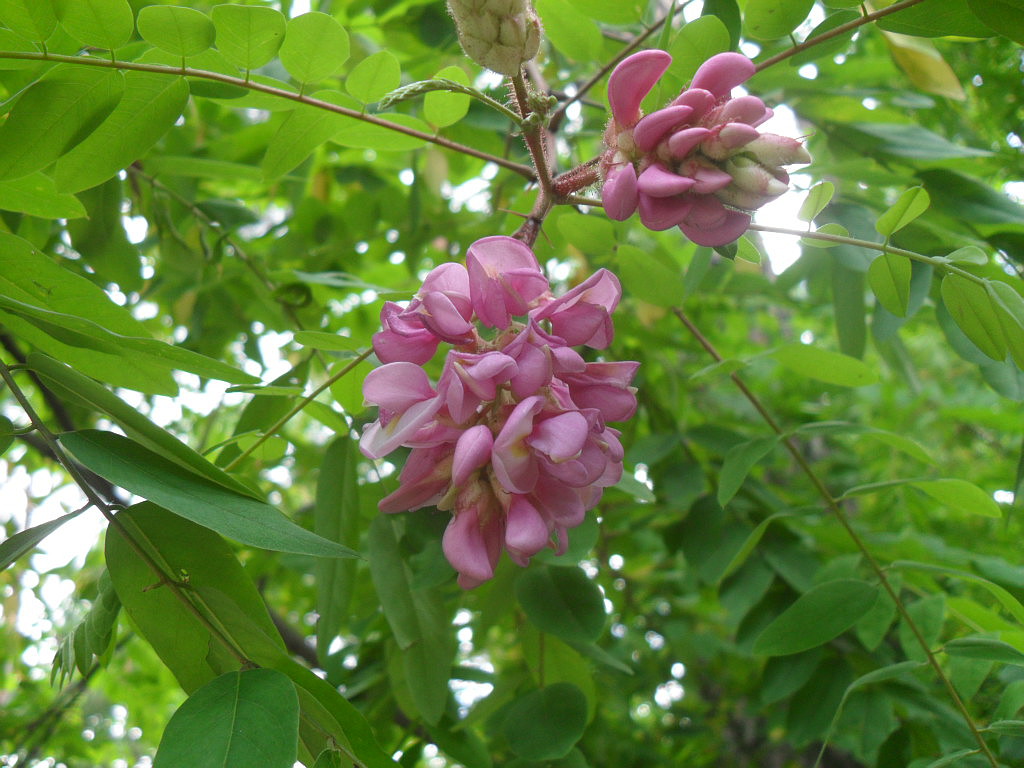
FLOWERS: The flowers are located on the end of branches that have no leaves. These flowers have a bright pink to lilac coloUr that is tinged with white. A pale-yellow spot is usually at the flower’s base.
FRUITS: Its fruit is a pod about 10–15cm. It is green when unripe and becomes yellow-brown when it reaches maturity. The pod produces four to ten round brown seeds.
The tree grows well in acidic soils with a pH of 4.5-6.2.
Uses
1. It is used as a wind break, shade tree for perennials, soil stabilization, live fences.
2.It is used as forage for cattle, sheep, and goats.
3. Trees are used for intercropping in part because they fix nitrogen in the soil and tolerate low soil fertility, when they are interplanted with crops they can boost crop yields significantly, without the need of chemical fertilizers.
4. It is one of the best plants used for traditional live fencing to protect agriculture and fruit bearing plantations from animals such as goats, cow, and buffalo.
Locations (Institutions)
Federal University of Technology, Akure, Nigeria (FUTA), Federal College of Agriculture, Akure, Nigeria (FECA)